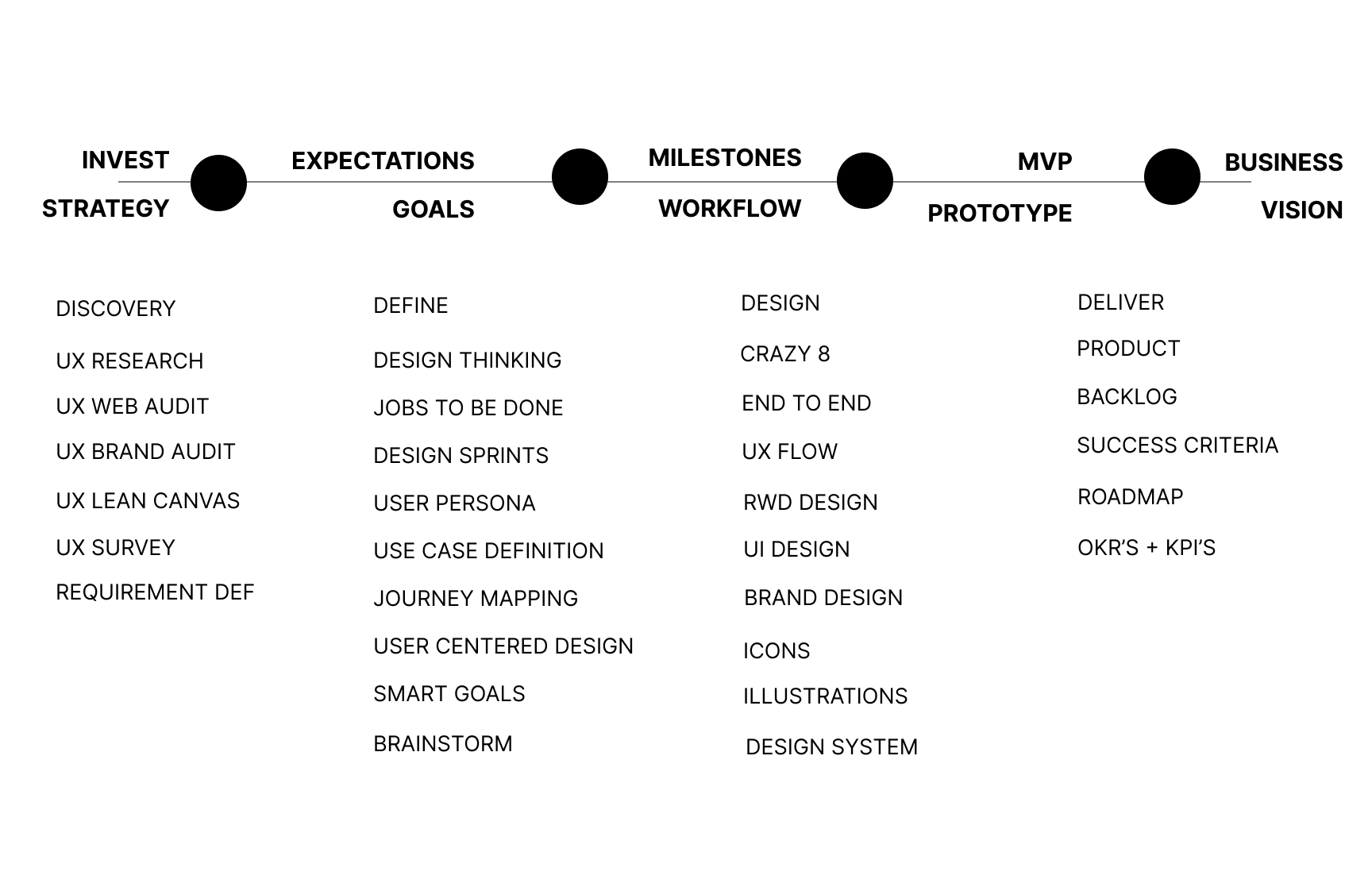
With the strategy canvas
we define gaps' and challenges'
to define a projekt roadmap,
- 01.1. Whats the Mission/Goal of the project ? [+]
- 01.2. What is the known challenge/problem ? root Cause ? Consequences ? [+]
- 01.3. What are the known insights ? Target Group ? [+]
- 01.4. We gather, brainstorm and align the team/stakeholder on a shared problem [+]
- 01.5. Who are your 3x main competitors ? SWOT analysis? [+]
- 01.6. Whats currently missing in the market? or in your product? [+]
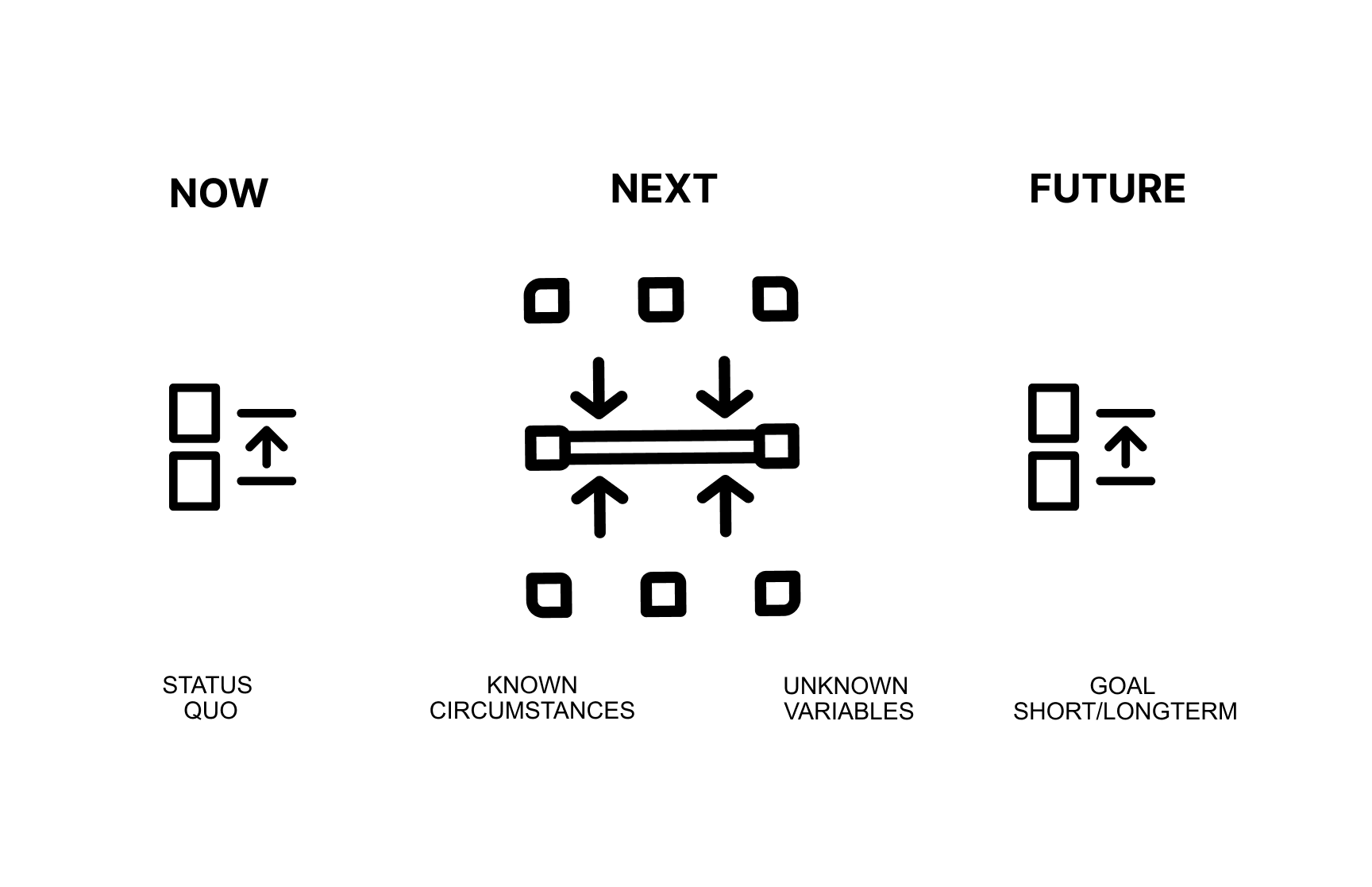
- 01.7. We Define "now-next-future” Actions to iterate on those challenges [+]
- incl. 3 Zoom Calls
Why Strategy is important? (we challenge assumptions, meassure performance and drive results, and callibrate what is needed to reach your GOAL)
- read more about the steps and detailed process -
With the foundational framing question we start every
UX design project.
What is the Mission and Goal of your project
request?
In UX practice, the “mission” is typically articulated as a problem-oriented, user-centered objective, not a vague vision statement. A strong opening question anchors the entire discovery phase.
Business: “What problem are we solving,
for whom, and why does it matter?”
Market: value Recognition? - customers percieved Value? perception Brand Messaging?
Leads: Website Trafic? - Marketing promotional Grafics
CRO: Improving UX ? - with Analysis and Users Test
- “What, for whom, and why?”
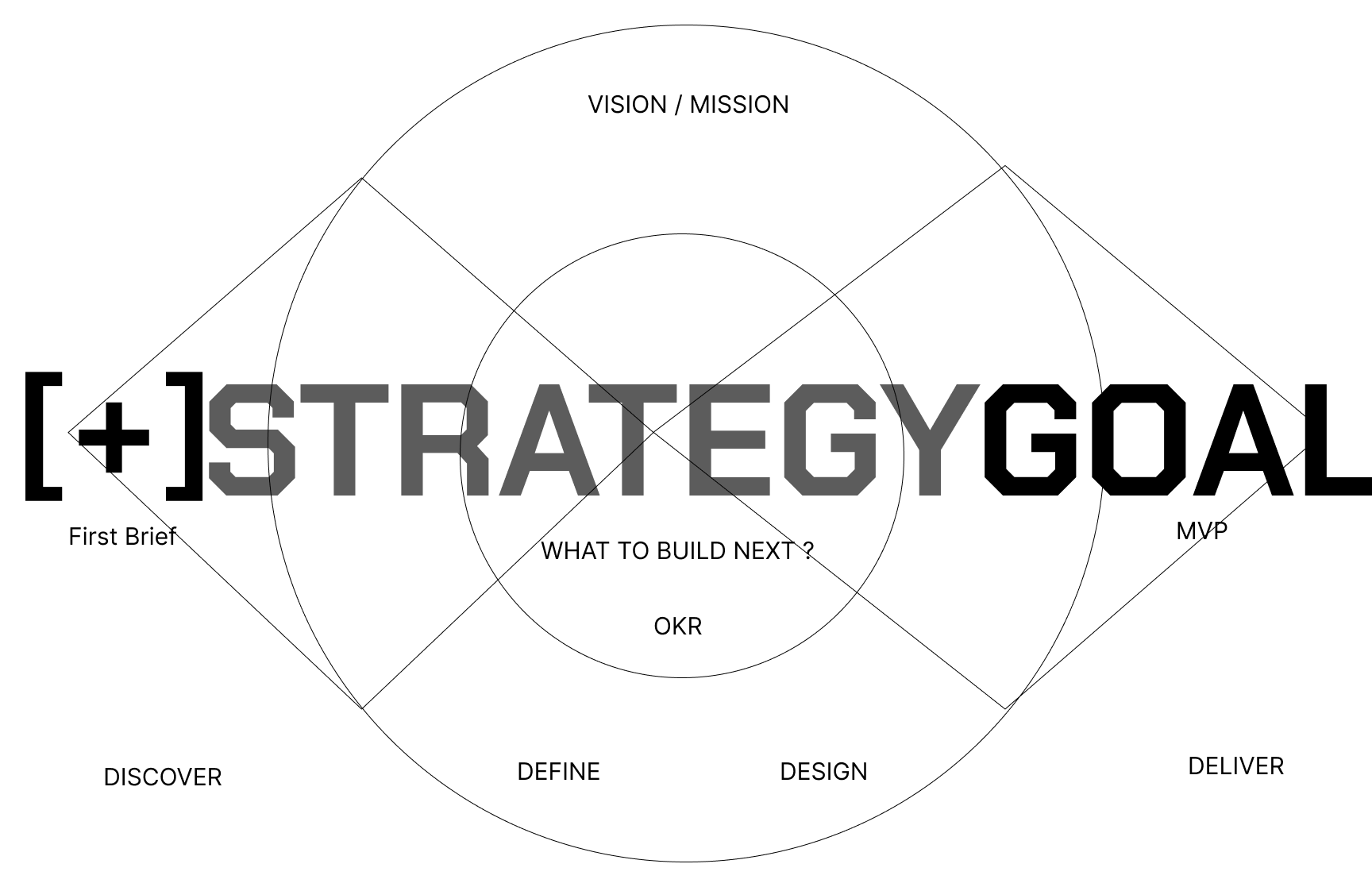
We create a compelling diagnoses problem statement for your individual project goal.
What is the
known problem
area?
Do we have insights yet?
Do we have analytics?
Do we have research reports?
Do we have all 3C's ?
We can start with assumption, but...
If those Insights are not clear, we cannot define meassurabel results. Book a UX Discovery Audit (Desk research, Journey Analysis, Screen Audit..) to get a clear ROI.
- “We need more insights”
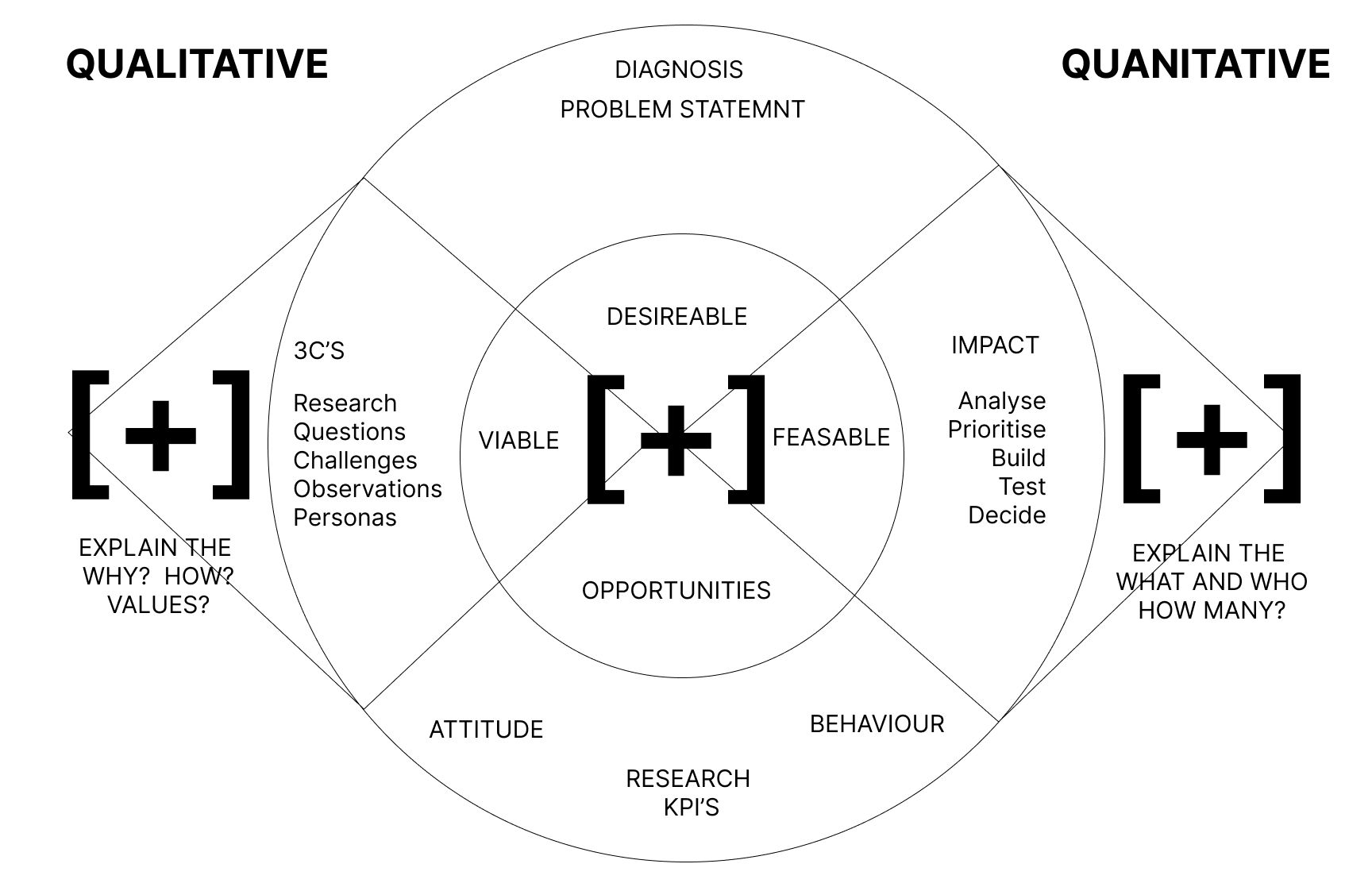
With coherent actions, we Expand the mission into milestone steps supporting the goal,
What are the known insights?
Users & Context: Who are the primary and secondary users?
Root Cause: In what context do they experience the problem?
Pain Points: What specific frustrations or inefficiencies exist today? How are users currently solving this (workarounds)?
Motivation: Why is this problem worth solving now?
Competitors: What do they do?
Outcomes: What does success look like for the user? What does success look like for the business?
- “map all UX Discovery Insights: 3C's”
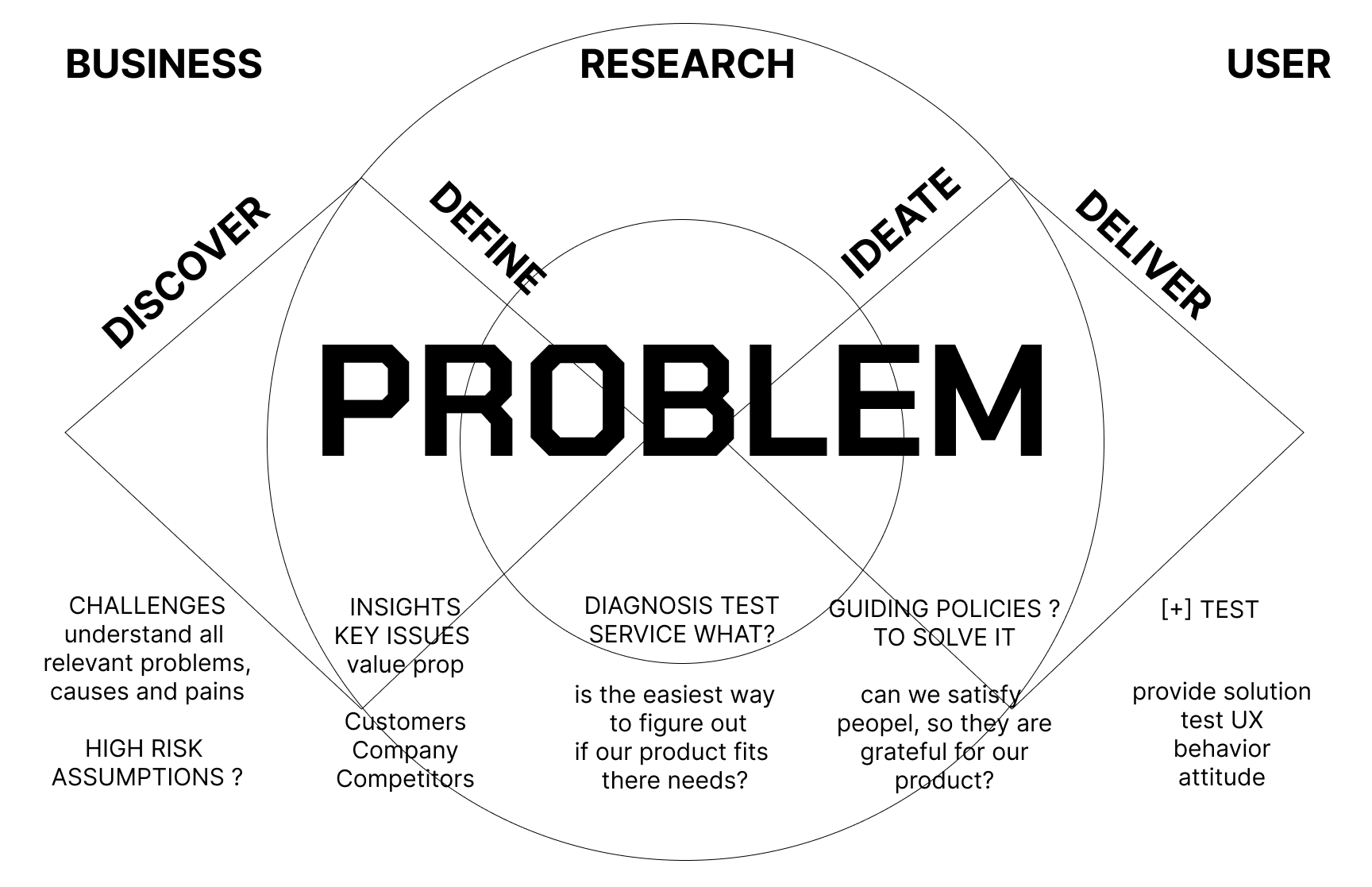
We align on a shared problem and de-risk the strategy supporting the goal,
Align Team or Stakeholder
on a Problem
We gather Stakeholder to collect feedback, or constrains on the insights and to align on the problem.
We can synthesize answers into something like: “We aim to help [user group] achieve [goal] by addressing [key problem], resulting in [measurable outcome].”
Avoid “We want to build an app that…” ❌. Instead start with: “Users struggle to…” ✅
- “Frame the User problem: Design Strategy”
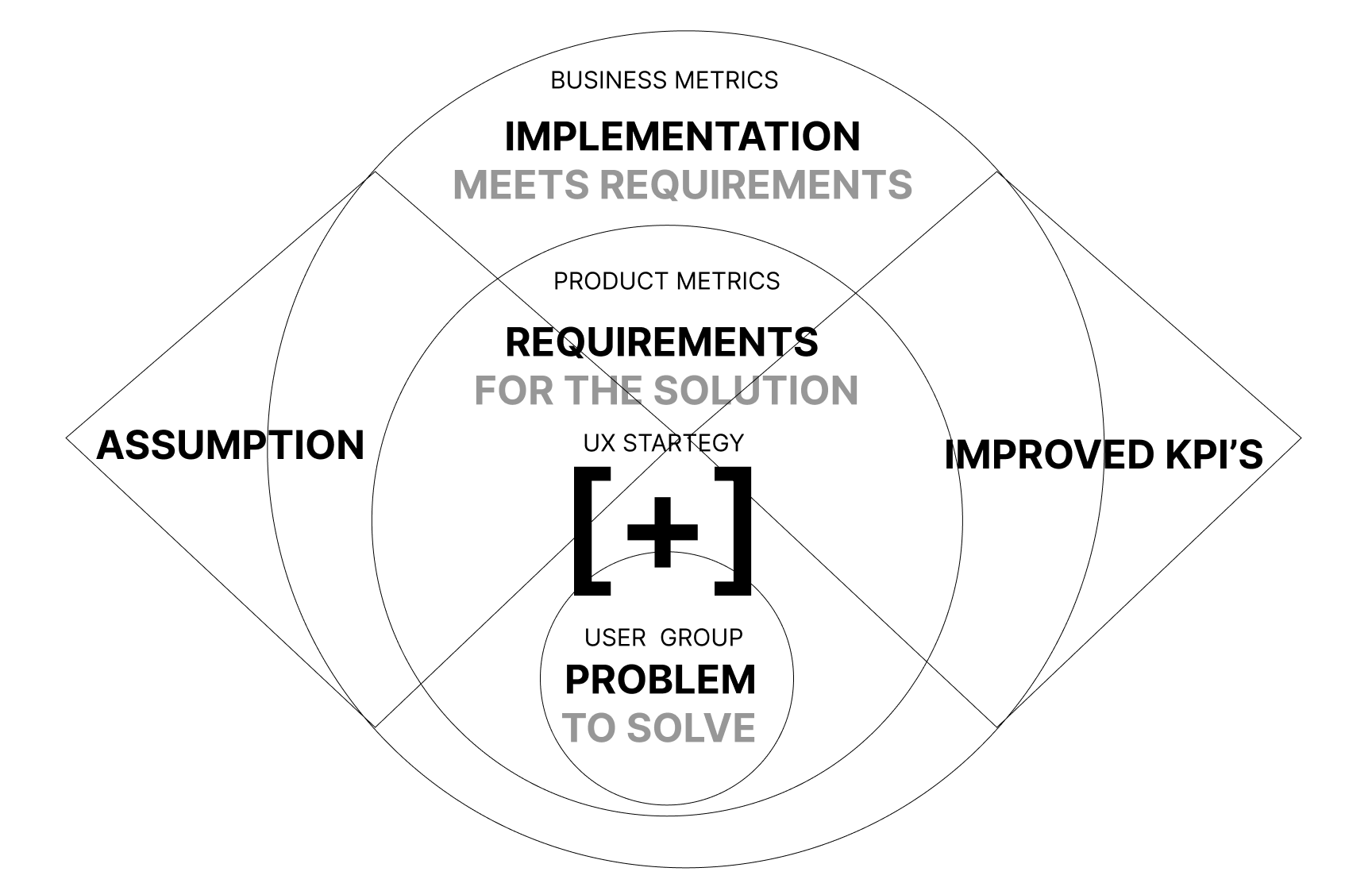
Break down the bigger Goal into coherent actions and agree on there impact / effort supporting the goal,
Define Now-Next-Future Actions
What connect business wishes with customer realities?
What are we assuming that needs validation?
What are guiding policies for features?
What are 3 topics to refine?
- Business Strategy: Kano Modal and MSCW priorisation
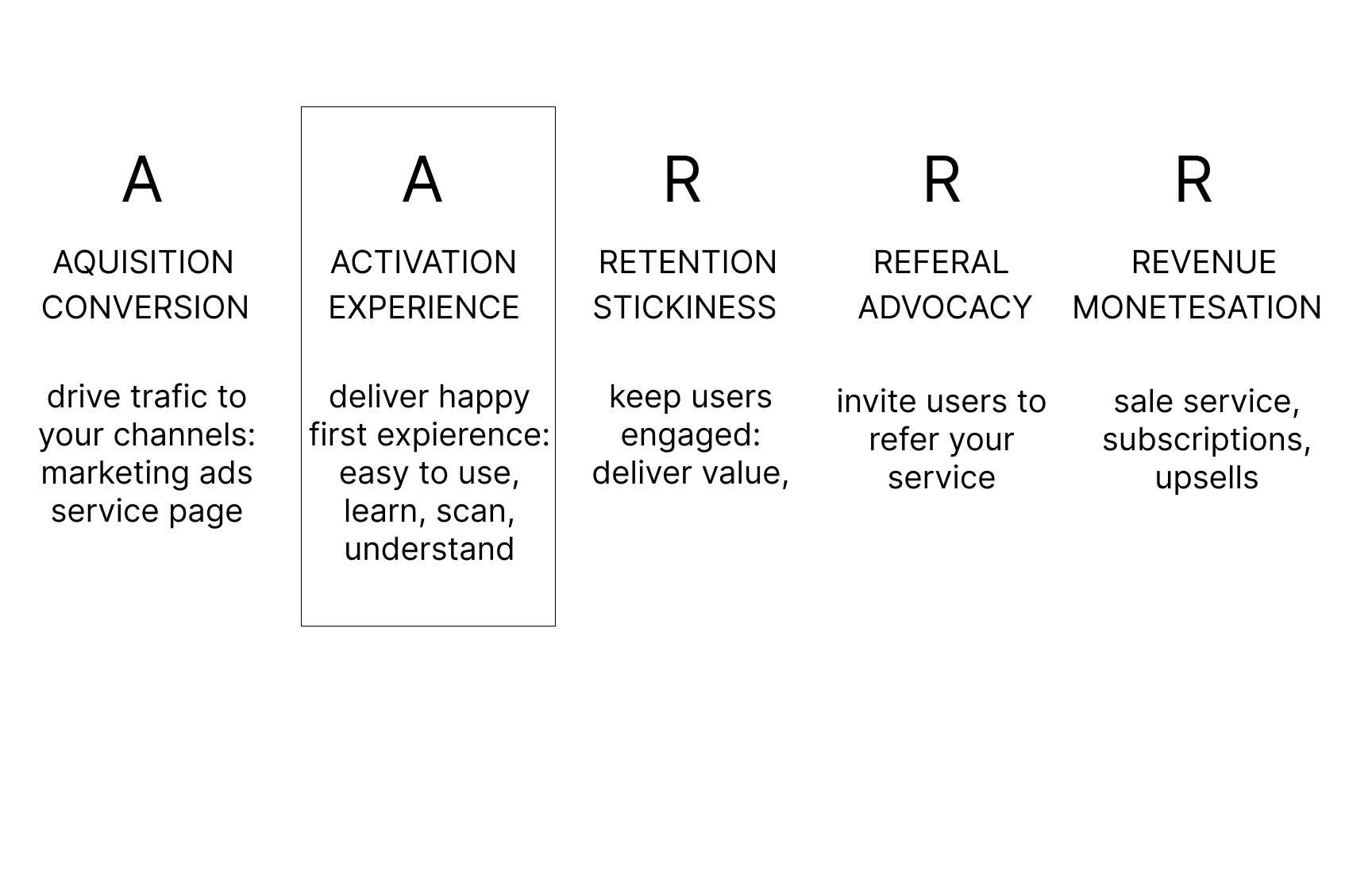
Specify Goals into SMART actions specifc' achieveable' meassurable' time bound,
SMART Goal's
Defining these parameters as they pertain to your goal helps ensure that your objectives are attainable within a certain time frame. This approach eliminates generalities and guesswork, sets a clear timeline, and makes it easier to track progress and identify missed milestones.
An example of a SMART-goal statement might look like this: Our goal is to [quantifiable objective] by [timeframe or deadline]. [Key players or teams] will accomplish this goal by [what steps you’ll take to achieve the goal]. Accomplishing this goal will [result or benefit].
- Now-Next-Future Planning
Project Milestones
To keep track about our achievments we define Milestones in Dropbox Paper, Gitlab, Jira or your prefered Project Management Tool.
Furthermore we create a File Sharepoint and Documentation, to give you access to the relevant Deliverables.